
Key Takeaways
1. Graves’ disease is an autoimmune condition that causes the thyroid to overproduce hormones.
2. You may have symptoms even when your lab results look “normal.”
3. Graves’ disease is manageable. Treatment options exist, and ongoing care makes a difference.
What is Graves’ Disease?
Understanding your condition is one of the most powerful things you can do for your health. Whether you’ve just heard the words ‘Graves’ disease’ for the first time, or you’ve been living with confusing symptoms and looking for answers, you’re in the right place. This overview explains Graves’ disease, symptoms to watch for, and available treatments. It uses clear and simple language to help you feel more informed and confident during discussions with your healthcare team.
How Graves’ Disease Affects the Thyroid
In Graves’ disease, the immune system mistakenly produces abnormal antibodies that trick the thyroid gland into producing more hormone than the body needs — a condition known as hyperthyroidism. Both genetics and environmental factors can trigger the condition, but anyone can develop it at any age. Graves’ disease can be properly managed with care.
Why the Thyroid Matters
Your thyroid is a small, butterfly-shaped gland in the lower front of your neck that plays a major role in regulating many of your body’s systems. When it produces too much or too little hormone, body functions can speed up or slow down, affecting factors like energy, heart rate, body temperature, digestion, and more. Because it influences so many systems, thyroid conditions like Graves’ disease can be hard to recognize or diagnose.
Common Symptoms of Graves’ Disease
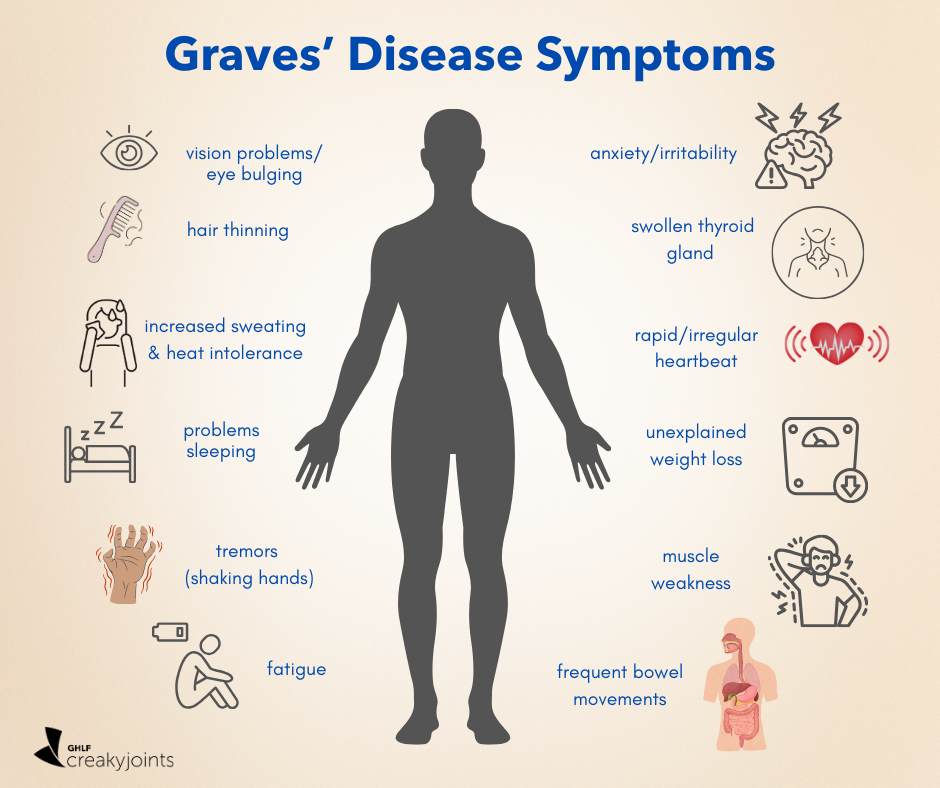
Graves’ disease can affect many parts of the body, and symptoms can vary from person to person (in type and severity). Some people feel only mildly affected, while others find the symptoms quite disruptive.
General Symptoms
- A visibly swollen thyroid gland in the neck
- Rapid or irregular heartbeat
- Unexplained weight loss
- Anxiety or irritability
- Trouble sleeping
- Muscle weakness or shaky hands
- Hair thinning or changes to skin
Eye-Related Symptoms
Some people with Graves’ disease also notice changes in their eyes, sometimes called Thyroid Eye Disease (TED). This can include things like:
- Dry, irritated eyes
- Sensitivity to light
- Puffy or swollen eyelids
- Eye bulging
- Blurred or double vision
Important Note! Eye symptoms and problems can occur even when the thyroid is working normally, so it’s important to tell your doctor right away if you notice any changes in your eyes.
What If Your Labs Look “Normal”?
Sometimes people with Graves’ disease feel genuinely unwell even when blood tests appear normal. But this situation is more common than you might think.
A “normal” lab result does not mean your symptoms are not real. It does not mean Graves’ disease should be ruled out. Standard blood tests only capture a snapshot of your hormone levels, and they don’t always reflect what the immune system is doing over time. Due to this, providers consider the “full picture”, including symptoms, history, and additional testing.
How Is Graves’ Disease Diagnosed?
Diagnosing Graves’ disease typically involves a combination of:
- A review of your symptoms and medical history
- A physical exam
- Blood tests to measure thyroid hormone levels and antibodies
- Imaging tests
Because many Graves’ disease symptoms can resemble other conditions, diagnosis may take more time, so it is completely okay to ask your doctor for additional testing — or to seek a second opinion from an endocrinologist (a hormone specialist).
How Is Graves’ Disease Treated?
There is no single treatment that works for every person with Graves’ disease. Individualized treatment options may include (but are not limited to):

Treatment plans often need monitoring and adjustment. Regular follow-up with your healthcare provider is an important part of long-term care.
You Are Not Alone
Living with Graves’ disease can be challenging and draining, both physically and emotionally, especially when symptoms are hard to explain or lab results don’t reflect how you feel.
You don’t have to face it alone. Advocating for yourself by tracking symptoms, asking questions, and learning about your condition can help make sure your care addresses your full experience with Graves’. You deserve support, understanding, and treatment that takes your symptoms and concerns seriously.
This article was made possible with support from Immunovant, Inc.
Would You Like More Information Like This?
If you’re interested in receiving more information, resources, and patient-friendly updates about Graves’ disease, we’d love to stay in touch. Leave your email address below to get helpful insights, research updates, and practical tips delivered straight to your inbox.

Track Your Symptoms and Disease Activity
Join CreakyJoints’ patient-centered research registry to track your symptoms, disease activity, and medications — and share with your doctor. Learn more and sign up here.