
In June of 2025, Mary Dunn noticed some unusual mild pain and stiffness in her upper arms and tops of both thighs. At first, she chalked it up to overdoing it with chores. At 78 years old, Mary was actively working to rebuild her strength and balance after long COVID — no small task when you live in a rural Texas town where hauling trash and recycling down a long stairwell is just part of the weekly routine.
Over the next few weeks, the pain became unbearable, and the fatigue was debilitating. She made an appointment with her doctor. What came next was a crash course in a condition she had never heard of. This is her story in her own words.
By Mary Dunn
Getting Diagnosed
I was diagnosed with polymyalgia rheumatica (PMR) in 2025 at the age of 78. I had never heard of PMR and did not know anyone who had it. It took almost a month to be diagnosed and to be seen by a rheumatologist. The diagnosis from my primary care internist was supported by the symptom relief I experienced after taking corticosteroids (prednisone or methylprednisolone).
My first doctor visit was a real learning experience. Once I had a diagnosis, I started looking for information. I read scientific papers and found more personal stories in Facebook groups where I could share my own experience. I also found a Mayo Clinic support group for PMR that is monitored by peers and focuses on understanding and treating the condition. This site is valuable because any misinformation is corrected quickly. It uses detailed medical language, but everyone is welcome to ask questions and get answers through peer-to-peer support.
Note: Mayo Clinic Connect explicitly states that the community platform is not a substitute for professional medical advice, diagnosis, or treatment. Because the responses come from other patients and not doctors, the site recommends that you direct any specific medical questions, symptom inquiries, or treatment concerns to your own doctor or primary care provider.
What PMR Feels Like
PMR is an underdiagnosed condition that is more common in older women than men. My symptoms continued over the weeks until one day I found myself stiff and achy all over — especially in my upper arms and thighs.
One hallmark of PMR is fatigue, and for me, that was the worst symptom. I could not complete tasks without stopping to rest. I also experienced headaches, malaise, and aching and stiffness in my shoulders, with pain in my neck, hips, and thighs. When I got up in the morning, the stiffness and pain lasted more than an hour. I had mild fevers and chills as well. Difficulty lifting my arms above my shoulders made everyday tasks — like reaching into cabinets or the refrigerator — a real challenge.
I had nearly every symptom at first, but over time and with medication, most of them have disappeared. Others with PMR may have a very different experience. PMR can be unpredictable, and unexpected changes often come up.
My First Rheumatology Appointment
Before I could even make an appointment with my rheumatologist, I had to submit a detailed personal medical history through the patient portal. I got an appointment within two weeks, which felt surprisingly soon. During the physical exam, my rheumatologist examined my hands for pain, but she also felt my temples and asked if they were tender. Her question was related to Giant Cell Arteritis (GCA), a serious condition that affects about 15% of people with PMR. GCA is important to know about because it can cause blindness if left untreated. Symptoms include pain in the temple area, jaw pain, scalp tenderness, new or severe headaches, and new or sudden vision changes.
My Initial Treatment Plan
My treatment involved continuing to take 15 mg daily of the corticosteroid prednisone, which felt almost miraculous because it brought quick relief. But while I was taking prednisone, I had a hard time sleeping. Although weight gain is common, I actually lost weight. The lack of sleep made it hard to stay motivated, so I talked with my doctor about tapering off prednisone.
Prednisone should not be stopped abruptly, so I had to taper my dose slowly. My rheumatologist’s tapering schedule was: 7.5 mg for two weeks, then 5 mg for two weeks, then 2.5 mg for two weeks, then stop. I was not able to finish that taper in eight weeks as originally planned. When I reached 5 mg, the pain and fatigue returned. I had to go back up to 7.5 mg and then lower my dose by 1 mg every two weeks. At 5 mg, I still had symptoms, so I tried alternating between 4 mg one day and 5 mg the next. In the end, I was not able to stop prednisone completely until March 1st — nine months after starting it.
Adding a Biologic Medication
While tapering prednisone, I was also prescribed an injectable biologic medication taken every two weeks. It seemed to help limit my symptoms, but I could not quite reach a symptom-free state. At times, I also needed intramuscular steroid injections.
The biologic is designed to calm an overactive immune system. Even though I used it faithfully as prescribed, I still had symptoms. I reported my symptoms to my rheumatologist via the patient portal, and she changed my biologic prescription to weekly instead of biweekly. After five weekly doses, my malaise and pain decreased.
The less welcome news is that the pain in my hip could no longer be explained by PMR alone, and I may need a hip replacement. It is important to know that prednisone can reduce inflammation broadly, making it harder to attribute new symptoms to a specific cause, which is one reason why more frequent visits to your doctor, nurse practitioner, or physician’s assistant are part of managing this condition.
Preparing for Doctor Visits
During one rheumatology visit, I realized I was not prepared for a productive conversation. I tend to be chatty when I really need to be structured.
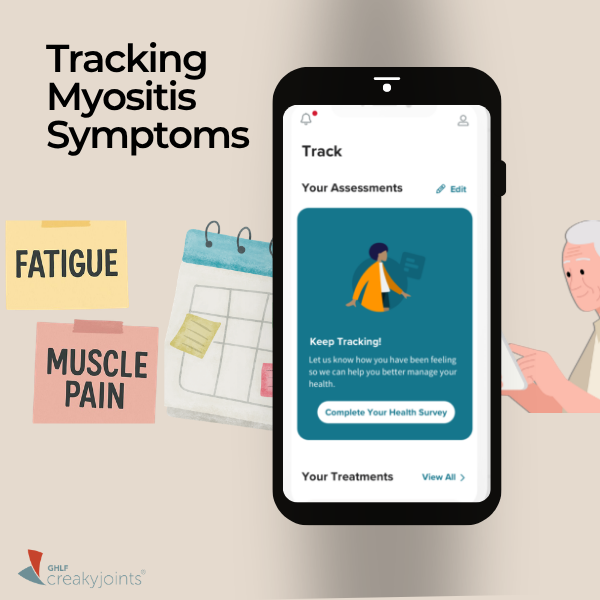
Now I keep a symptom diary — I use both a diary app and my phone’s calendar to jot down short notes as things come up.
After that unprepared visit, I sent my rheumatologist a message letting her know I wanted to come better prepared going forward. From then on, I made a habit of reporting how I had been feeling since the last visit and writing down the questions I wanted answered. My appointments became much more productive, and my physician appreciated the organized updates.
My Five Tips for Navigating PMR
- Prepare for your doctor visits. Write down how you’ve felt since your last appointment and list your questions ahead of time. A little structure goes a long way.
- Find your community early. Well-monitored Facebook PMR groups and peer-monitored forums can be a lifeline — both for accurate information and for feeling less alone.
- Give yourself grace during treatment changes. Be patient with yourself if your body needs more time as you adapt to new treatment or taper from prednisone.
- Keep a symptom diary. A diary app or even quick notes in your calendar can help you track patterns and show up to appointments with something useful to say.
- Talk about PMR. It’s underdiagnosed and not well understood by the public. Every conversation you have helps someone else feel seen — or get diagnosed sooner.
Managing My PMR
This has not been an easy condition to manage, but I have been able to adjust my daily routine and work toward goals that matter to me. I am grateful to have a supportive husband and good health insurance — I know not everyone has those resources.
Everyone’s experience with PMR is different, but one of the most important parts of this journey is finding support and information. I enjoy my Facebook PMR groups and have learned so much from others’ stories. My friends know I have PMR, but sometimes struggle to remember the details — it is a complicated condition, and it is also invisible. That invisibility can add to the experience of not feeling seen, which is something many of us know well.
Still, I have found that sharing my story makes a difference. PMR is not widely known. The more we talk about it — with friends, family, and even strangers — the better understood it will become. Share your journey whenever you can.
You can learn more about PMR here.
Interested in trying PatientSpot to track symptoms?
Create a free account at PatientSpot.org and begin tracking your symptoms today.
Are you interested in more resources about polymyalgia rheumatica (PMR)? Enter your email below to subscribe and receive our newsletter and resources!
Author and PMR patient Mary Dunn lives in Texas.