
Living with Graves’ disease often means more than managing a single hormone or organ. For many patients, the condition — an autoimmune disease that can affect the thyroid, eyes, and beyond — can disrupt energy, sleep, mood, weight, heart rate, and even vision, sometimes in ways that are unpredictable or difficult to explain.
A recent survey from the Global Healthy Living Foundation (GHLF) explored how people with Graves’ disease are managing their condition, how often they have blood tests (also called lab work) to check their thyroid hormone levels, and what conversations they are having with their health care providers.
The findings highlight the complexity of living with Graves’ disease, an autoimmune condition that can affect far more than thyroid function alone. The need for patient education and support, ongoing monitoring, and individualized care are urgent ones.
What Is Graves’ Disease?
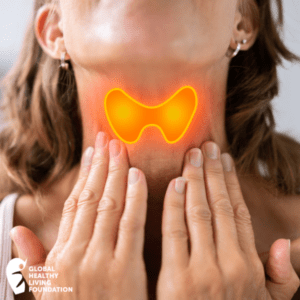
Graves’ disease is an autoimmune condition where the immune system mistakenly sends the wrong signals to the thyroid gland, causing it to go into overdrive and produce too much thyroid hormone. This is often referred to as hyperthyroidism. The thyroid controls many important body functions, including metabolism, heart rate, energy levels, and body temperature.
Because thyroid hormones affect nearly every organ system, Graves’ disease symptoms can vary widely from person to person.
Some people experience:
- Rapid heartbeat or palpitations
- Anxiety or irritability
- Tremors
- Weight loss despite normal eating habits
- Heat intolerance and sweating
- Difficulty sleeping
- Fatigue or muscle weakness
Others may develop visible physical symptoms such as:
- Enlarged thyroid gland (goiter)
- Eye changes, including bulging eyes or vision problems
- Hair thinning
- Changes in menstrual cycles
What the Survey Found
The GHLF launched the Graves’ Disease Rapid Cycle Survey in April 2026 to better understand how people with Graves’ disease are managing their condition, discussing remission with providers, and monitoring their thyroid health. It was shared community wide through GHLF’s email list and social network.
Survey responses reflected the variety of treatment experiences among people living with Graves’ disease. Some participants reported receiving radioactive iodine (RAI) therapy, while others had surgery to remove all or part of their thyroid gland. Several respondents shared that their thyroid levels had remained stable or within a normal range for many years following treatment. These findings highlight that there is no single treatment path for Graves’ disease, and that patients may have different experiences managing their condition over time.
Treatment for Graves’ disease is highly individualized and depends on factors such as symptom severity, age, overall health, and patient preference.
Each treatment option for Graves’ disease has its own benefits and considerations. The following sections explain the approaches reported by survey participants.
Anti-Thyroid Medications
Many people are initially treated with anti-thyroid drugs (ATDs), such as methimazole. These medications work by reducing the thyroid’s production of hormones.
Some patients achieve remission after taking ATDs for a period of time generally anywhere between 12-18 months, , while others require ongoing treatment or additional therapies.
Radioactive Iodine (RAI)
Radioactive iodine therapy uses a small amount of radioactive iodine to damage thyroid cells and reduce hormone production. Over time, this often results in hypothyroidism, requiring lifelong thyroid hormone replacement medication.
Thyroid Surgery
Some patients may opt for and undergo thyroidectomy, surgery to remove part or all of the thyroid gland. Surgery may be considered in cases involving large goiters, medication intolerance, suspicious thyroid nodules, or patient preference.
Symptom Management
In addition to treating the thyroid itself, many patients use medications such as beta blockers to help manage symptoms like rapid heart rate, tremors, and anxiety while waiting for thyroid levels to stabilize.
Eye Conditions Associated with Graves’ Disease
We also asked participants whether they were living with other conditions related to Graves’ disease. Among the 68 people who answered this question, the most commonly reported condition was Thyroid Eye Disease (TED), with 17 respondents reporting a diagnosis. A smaller number reported Graves’ ophthalmopathy (3 respondents) or Graves’ orbitopathy, also known as thyroid-associated orbitopathy (TAO) (4 respondents). These are different terms for what is essentially the same type of condition, and are sometimes used interchangeably with TED. These findings highlight that some people with Graves’ disease may also experience conditions that affect the eyes and surrounding tissues.
To help put these survey findings into context, here is a brief explanation of the conditions mentioned by participants.
- Thyroid Eye Disease (TED): An autoimmune condition that can occur with Graves’ disease and affects the tissues and muscles around the eyes, causing symptoms such as eye bulging, dryness, irritation, or double vision.
- Graves’ Ophthalmopathy: Another name for Thyroid Eye Disease (TED). It refers to inflammation and swelling of the tissues around the eyes.
- Graves’ Orbitopathy: Another term for Thyroid Eye Disease (TED), describing the effects of the condition on the muscles and tissues within the eye socket.
- Thyroid-Associated Orbitopathy (TAO): Another name for Thyroid Eye Disease (TED). It occurs when the immune system mistakenly attacks tissues around the eyes.
The Importance of Shared Decision-Making
The survey findings highlight the importance of ongoing communication between patients and their health care providers. Because Graves’ disease is most often managed by an endocrinologist and may involve other specialists depending on a person’s symptoms and treatment needs, it is important for patients to understand who is involved in their care and why.
Understanding what tests are being ordered, how often thyroid levels should be monitored, and what remission means can help patients feel more informed and empowered in managing a chronic autoimmune disease.
As awareness around Graves’ disease continues to grow, patient advocates say education and shared decision-making remain critical components of care.
To learn more about Graves’ disease, its symptoms, how it’s diagnosed, and treatment options, click here. https://creakyjoints.org/education/what-is-graves-disease/
Are you interested in more resources about Graves’ disease? Enter your email below to subscribe and receive our newsletter and resources!
Mayo Clinic. “Graves’ Disease – Symptoms and Causes.” Mayo Clinic, 14 June 2024, www.mayoclinic.org/diseases-conditions/graves-disease/symptoms-causes/syc-20356240.
MayoClinic. “Graves’ Ophthalmopathy.” Mayo Clinic, www.mayoclinic.org/diseases-conditions/graves-disease/multimedia/exophthalmos/img-20007978.