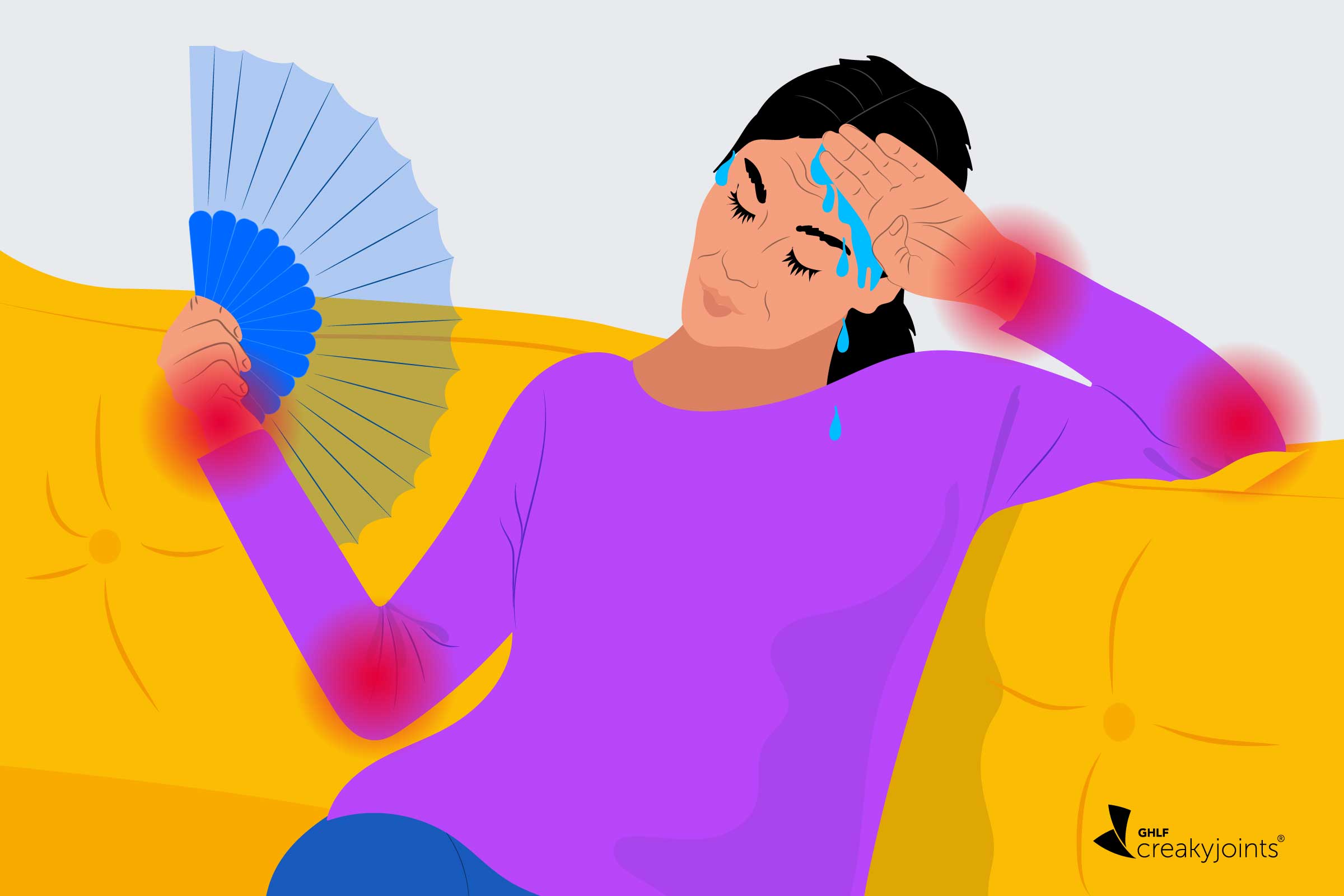


Let’s start by stating the obvious: Living with chronic illness is overwhelming. Your illness (and often, illnesses) can at times affect every aspect of your life, making it feel like a full-time job (on top of all your other full-time roles and responsibilities).
“Chronic illness just sucks, there’s no other way to put it,” says Kacey C., 35, of Denver, CO. “That takes a toll mentally.” Dealing with her rheumatoid arthritis and fibromyalgia is so consuming that even positive things — like planning a family vacation — can feel overwhelming. “It feels like I’m just not resilient; like things that aren’t a big deal to other people shouldn’t be that hard for me either,” she says, “but they are.”
What’s more, feeling overwhelmed can lead to increased physical symptoms which, in turn, make it even harder to cope, says neuropsychologist Sanam Hafeez, PsyD, Director of Comprehend the Mind, and faculty member of Columbia University in New York City.
So what’s the solution? Paying close attention to the factors that lead to feelings of being overwhelmed is the first step. Next, give yourself grace and experiment with a few strategies to find what works for you when chronic illness feels like too much to handle.
Factors That Make Chronic Illness Feel Overwhelming
Unfortunately, the chronic nature of chronic illnesses makes it inherently overwhelming, starting with your diagnosis. “Adapting to a new reality after a diagnosis of chronic illness can cause individuals to feel overwhelmed, helpless, or hopeless,” says Haley Perlus, PhD, a psychologist specializing in mental toughness, a health and wellness coach, and an adjunct professor at the University of Colorado.
Even after you’ve accepted your diagnosis, the uncertainty about your future and the unpredictability of day-to-day life is a lot to deal with. It doesn’t take much to push someone with a chronic illness “over the edge,” says Dr. Perlus, noting that “chronic illness can overwhelm you socially, cognitively, emotionally, and physically — taking a serious toll.”
Maybe most days you manage okay, but there are times when you may go from being overwhelmed-but-functioning to completely torpedoed by your disease (and everything else). “For me, really anything outside my regular schedule can trigger those feelings of being overwhelmed,” Kacey C. says. “I have my daily routine planned out but I’m not good at changing on the fly.”
Overwhelming factors for you can be big or little, a single event or cumulative, and may include:
- Getting an upsetting diagnosis or new diagnosis, in addition to your current condition
- Needing to start, stop, or change medications
- Having to find a new medical provider
- Mental health conditions like anxiety and depression
- An injury or setback in your treatment
- Losing functionality and ability in your daily life
- Experiencing noticeable disease progression
- Living for an extended period with chronic pain
- Financial stress from not being able to work and/or medical bills
- A change in your relationship with a partner or close loved one
- Losing a job or hobby
- Missing out on an anticipated holiday, trip, or other event
What to Think and Do When You’re Feeling Overwhelmed
Many of these factors are out of your control, and you may not be able to change the situation, which can add to the stress. It may be tempting to just give up and crawl back in bed, but there are proven ways to deal with feeling overwhelmed, says Laurie J. Ferguson, PhD, a licensed clinical psychologist specializing in chronic illness, a certified coach, and an ordained minister. Dr. Ferguson is also the Director of Education Development at the Global Healthy Living Foundation (GHLF).
Start by trying one of these tips from our experts and people from the CreakyJoints and GHLF community who live with chronic illness.
Make a mind map
Take a blank sheet of paper, draw a circle in the middle, and write “I’m overwhelmed” in the circle. From there, draw branches out from the main circle, labeling each new circle with something that is contributing to your feelings right now. Simply getting it out on paper is a mental relief and it allows you to write without the pressure of journaling.
Prioritize your concerns
When you’re feeling overwhelmed, every, single thing (big or small) can feel like an emergency — to the point where you can’t deal with anything. But not all tasks are the same urgency. Make a list of your concerns (or use your mind map) and prioritize based on order of importance. Make a goal to deal with only one thing at a time and only doing as many items as you have energy for.
Keep a feelings journal
Some people prefer to get their feelings out in a more linear way, by writing in a journal. Keep a notebook in your bag or open the notes app on your phone and jot down some bullet points every time you feel overwhelmed. Resist the urge to write pages and pages as that can become overwhelming in and of itself.
Distract yourself
Distraction isn’t a great long-term strategy for dealing with overwhelming feelings, but it can be a great trick to use in the moment when things feel like they are crashing down. Often, 15 minutes is enough time to let the “crisis” feeling simmer down to something more manageable.
- Watch a funny video online
- Play a quick game on your phone
- Do a meditation or gentle stretching routine
- Go for a walk and listen to music or a podcast
- Read a chapter of a book
- Do a hobby
- Scroll through photos of loved ones
- Look at funny/sarcastic illness memes
Finding a way to laugh at some aspects of her situation is a lifesaver, says Ame P., 28, of Mississippi, who has fibromyalgia and chronic mental illness. She collects memes and asks loved ones to send her their favorites as well. “It gets me out of my own head when I’m down,” she says. Check out these 15 memes about that completely get what it’s like to have fatigue with chronic illness.
Meditate on the present
Feeling overwhelmed often stems from worrying about the future, so learning to focus on the present (and what you can do right now) can be incredibly helpful in reducing stress and anxiety. Try a simple breathing technique or a guided meditation, like this “Mindful Body Scan Meditation,” designed to help you stay present. Or download an app like Calm or Headspace to help you get started.
Let go of perfectionism
Does something need to get done perfectly or does it just need to get done? Take a realistic look at your To-Do list and pare down what really needs to get done to accomplish each thing. For example, maybe you don’t have to make your kids’ bed every morning, or maybe it’s okay to leave the laundry basket lying around for a few days if you just don’t have the time or energy to put away clothes. Ask a loved one for help if you’re too overwhelmed to honestly assess each situation.
Decide what is a “want” and what is a “need”
When you’re overwhelmed everything feels like a “need” but when you sit down and really look at your tasks, you’ll discover that very few things are urgent. Give yourself permission to postpone or give up some of the “wants” or “would be nices” to focus on the real needs.
Say no
The spoon theory states that you have only so many “spoonfuls” of time, energy, and resources to give each day and when they’re gone, they’re gone. People with a chronic illness start each day with even fewer spoons than generally healthy people, so it’s critical to learn when to say no. Saying yes to everything is a one-way ticket to feeling majorly overwhelmed.
Vent to a safe person
There is something so incredibly healing and stress-relieving about saying things out loud. Even if nothing changes, being able to talk about your feelings with a loved one can help you feel better. It can be a therapist, but it doesn’t have to be. Ask a friend or family member: “Can I talk to you for 15 minutes. I don’t need you to fix this; I just need someone to listen.”
Ask your friends about themselves
Sometimes it’s helpful to take a break from your own problems and listen to what other people are dealing with, says Kacey C. It doesn’t have to be heavy, either. She suggests asking about upcoming vacations, how kids are doing, or hobbies you have in common. Just remember that you’re there to listen, you don’t need to worry about fixing their problems.
Take a walk outdoors
The goal isn’t exercise (although that’s a great stress reliever too) but to simply be outside and move. Smell the fresh air. Feel your leg muscles working. Focus on the horizon. Let the sunlight hit your skin. Even a short walk around the block can significantly lower stress.
Have a mantra
Repeating a positive mantra can help you calm down. “When I feel overwhelmed, I tell myself: ‘You can do it,’” says Valentin, 50, of Moldova, who has chronic pain. It may sound simple and silly to some, he says, but repeating it helps him refocus his mind on something positive. And when you’re already feeling overwhelmed, simple is better.
Some other mantras to try:
- I’m doing the best I can
- One step at a time
- Progress over perfection
- All will be well
- Breath in and breath
Practice radical acceptance
This philosophy is essentially learning to accept situations exactly as they are, without trying to control them or judge your feelings. Letting go of control often allows you to let go of some of the stress, although it not easy.
This does not mean passive submission to injustice or the hand we’ve been dealt, but that you say, “Okay. This is what is. How do I live with it? How do I work with it so it doesn’t crush me?”
“Radical (root) acceptance means to live into the reality and see where it takes us. When we can live into this attitude, it will support our resilience,” says Dr. Ferguson. If you’re interested in this approach, it’s best to work with a trained mental health professional. There are also several books that may help you learn more about the philosophy, including “Radical Acceptance: Embracing Your Life With the Heart of a Buddha” and ”Radical Acceptance: The Secret to Happy, Lasting Love.”
Connect with someone else
Living with a chronic illness can feel isolating and overwhelming when you try to cope alone. Meet a friend for coffee, go for a walk with your child, call a parent, or send a quick text to a loved one to let them know you’re thinking about them.
Take a nap
Sleeping gives your brain a mental reset, allowing it to turn off and stop perseverating over all your worries. Conversely, not sleeping well is a huge trigger for feeling overwhelmed. While you don’t necessarily want to nap every day — especially if doing so causes joints to stiffen up — give yourself permission to take a nap when your feelings feel too much.
Just don’t sleep too long, as that will interfere with your regular sleep schedule. “I’ve found that 20 minutes is my magic number,” Jennifer D., 34, of Washington, D.C., who has psoriatic arthritis, told CreakyJoints in a previous article on napping and arthritis. “I wake up feeling refreshed and I can still fall asleep fairly easily at bedtime.”
Tap into your spirituality
Whether you follow a particular religion or are spiritual in your own way, believing in something bigger than yourself can be a powerful way to put your problems in perspective. You may find relief in praying, meditating, reading a religious text, speaking with a clergyperson, attending a religious meeting, going to a religious building, or walking outside in nature.
Do your research (moderately)
Sometimes feeling overwhelmed can stem from a lack of knowledge about what’s happening to you and your body. Getting educated about your illness and treatments (or other tricky situations in your life) can help you feel more in control and calm. Do set a limit, however, as it’s possible to get sucked into endless rabbit holes of research and end up with information overload.
Check your pride
When you’re overwhelmed, you need help. But asking for help can be easier said than done. “Asking for help has never been easy for me but since I’ve gotten sick I’ve had to learn to suck up the pride and just ask,” says Ann H., 61, Washington, who has chronic health complications from breast cancer. Get tips on how to ask loved ones for help (without feeling like a burden).
Take a trip down memory lane
You’ve been through hard times before and the fact that you are here is proof you succeeded. You can do it again. Remembering times when you’ve overcome difficult situations in the past can help remind you of how strong you really are.
Ask your loved ones what is important to them
The need to be a good spouse, parent, friend, sibling, child, or coworker is overwhelming on its own, but add in a chronic illness, and it can feel downright impossible. Talk to the important people in your life and ask them what is most meaningful to them — and then let the rest of it go. For instance, your 6-year-old wants to spend time with you, and this can be done without going to Disney World.
Meet with a support group
Whether you meet online or in-person, being around others who have the same illness as you, or who are experiencing something similar, can be immensely helpful. Knowing others have been where you are and seeing how they deal with it can help you manage your own difficult feelings.
You can follow CreakyJoints on social media — Facebook, Instagram, Twitter, Tik Tok, YouTube — to attend our virtual events like CreakyKitchen and CreakyChats, and connect with other patients who are seeking community for living with arthritis and other chronic illness. It’s also helpful to ask your health care provide for recommendations of local support groups.
Know when to seek outside help
Feelings of being overwhelmed, even extreme feelings, are very normal. “The times we are living in are extraordinarily overwhelming in a way we’ve never experienced,” says Dr. Ferguson. “You have your illness that you’re already dealing with and then you add in outside factors like the pandemic, racial tensions, political unrest, and economic instability and it’s a recipe for feeling overwhelmed.”
However, there are times when you become so overburdened that you can’t take care of yourself, manage the basics of daily life, or become a danger to yourself or others. If this is a case, consider talking to a therapist. “Friends and family can be helpful, but going to a professional counselor is so helpful,” says Kacey C. “They can listen and offer suggestions to deal with the depression, anger, and sadness in ways other people can’t.”
Here are some signs that it’s time to call a medical professional right away:
- You have suicidal ideations or a plan
- You are self-harming in any way, including cutting, burning, purging, or substance misuse
- You are unable to manage basic self-care
- You are unable to eat or are eating way too much
- You aren’t sleeping or are sleeping too much
- You have chronic feelings of worthlessness or self-hatred
- You no longer find joy in your favorite activities
- You are isolating yourself from others
- You show other signs of anxiety, depression, or another mental illness
- Your loved ones tell you they are worried about you
Be a More Proactive Patient with ArthritisPower
Join CreakyJoints’ patient-centered research registry to track your symptoms, disease activity, and medications — and share with your doctor. Sign up.
Interview with Laurie J. Ferguson, PhD, licensed clinical psychologist specializing in chronic illness, certified coach, ordained minister.
Interview with Sanam Hafeez, PsyD, neuropsychologist, Director of Comprehend the Mind, and faculty member of Columbia University in New York City.
Interview with Haley Perlus, PhD, psychologist specializing in mental toughness, health and wellness coach, author, and Adjunct Professor at the University of Colorado.